
A few weeks ago my grafted Ortanique seedling developed two new growths. One was below the graft union and the other was opposite to it. Both of them had leaves that were a different shape to the leaves of the scion and they were much larger. They also grew incredibly fast, reaching almost half the size of the branches growing from the graft union within a week.
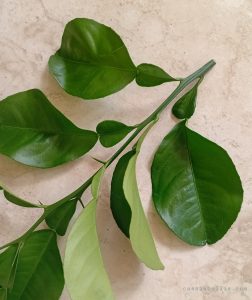
From my research, the growth below the graft union was a sucker. The growth that was opposite the graft union was most likely a water sprout. It had long thorns along the stem and the leaves were extremely large. Both suckers and water sprouts can affect the health of the tree in the long-term.
I’ve read conflicting opinions on whether or not you should leave water sprouts on the tree. I decided to remove the water sprout in addition to the sucker because I felt that leaving it could overwhelm the tree at this early stage in its life, and it would be more beneficial for the tree to direct its energy to producing growth of the fruiting wood above the graft union. Time will tell if this strategy is successful.
This is the tree after I pruned it.
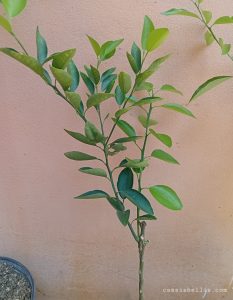
I’ll need to prune for shape and structure in the future, but for now I will leave the tree to recover from this first prune and see what its response is.
On a more general note, I’ve been researching how to prune citrus trees so the mature trees will be as healthy and structurally sound as possible. There is also the aesthetic component; I’d like them to look beautiful too! I’ve found some helpful videos about pruning young fruit trees here and here.
All photos taken by me.
Reading
1. Identifying and dealing with citrus suckers & sprouts. Growinginthegarden.com https://growinginthegarden.com/identifying-and-dealing-with-citrus-suckers-spr
2. Can water sprouts and suckers be prevented on trees? University of New Hampshire.
https://extension.unh.edu/blog/2021/02/can-water-sprouts-suckers-be-prevented-trees